Organ Pipe Cactus National Monument
 Recreational activities from spring through autumn include car and bus touring along the park's paved loop road; hiking, bicycling, and horseback riding on carriage roads (motor vehicles are prohibited); rock climbing; kayaking and canoeing on lakes and ponds; swimming at Sand Beach and Echo Lake; sea kayaking and guided boat tours on the ocean; and various ranger-led programs. Winter activities include cross-country skiing, snowshoeing, snowmobiling, and ice fishing. Two campgrounds are located on Mount Desert Island, another campground is on the Schoodic Peninsula, and five lean-to sites are on Isle au Haut. The main visitor center is at Hulls Cove, northwest of Bar Harbor.
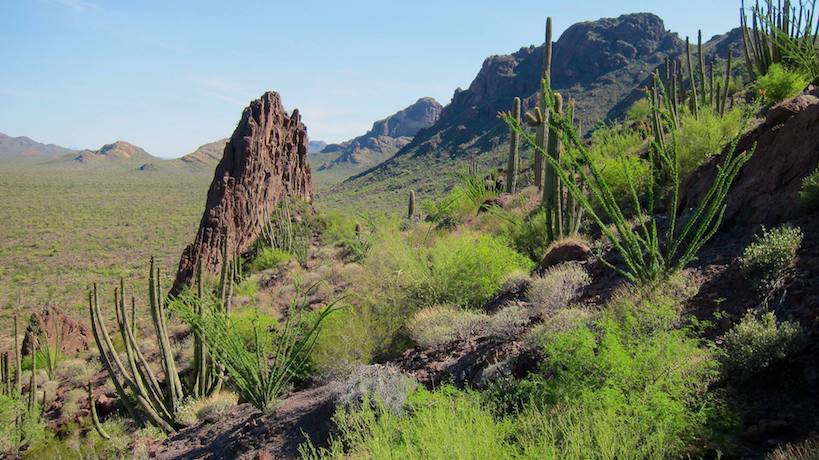
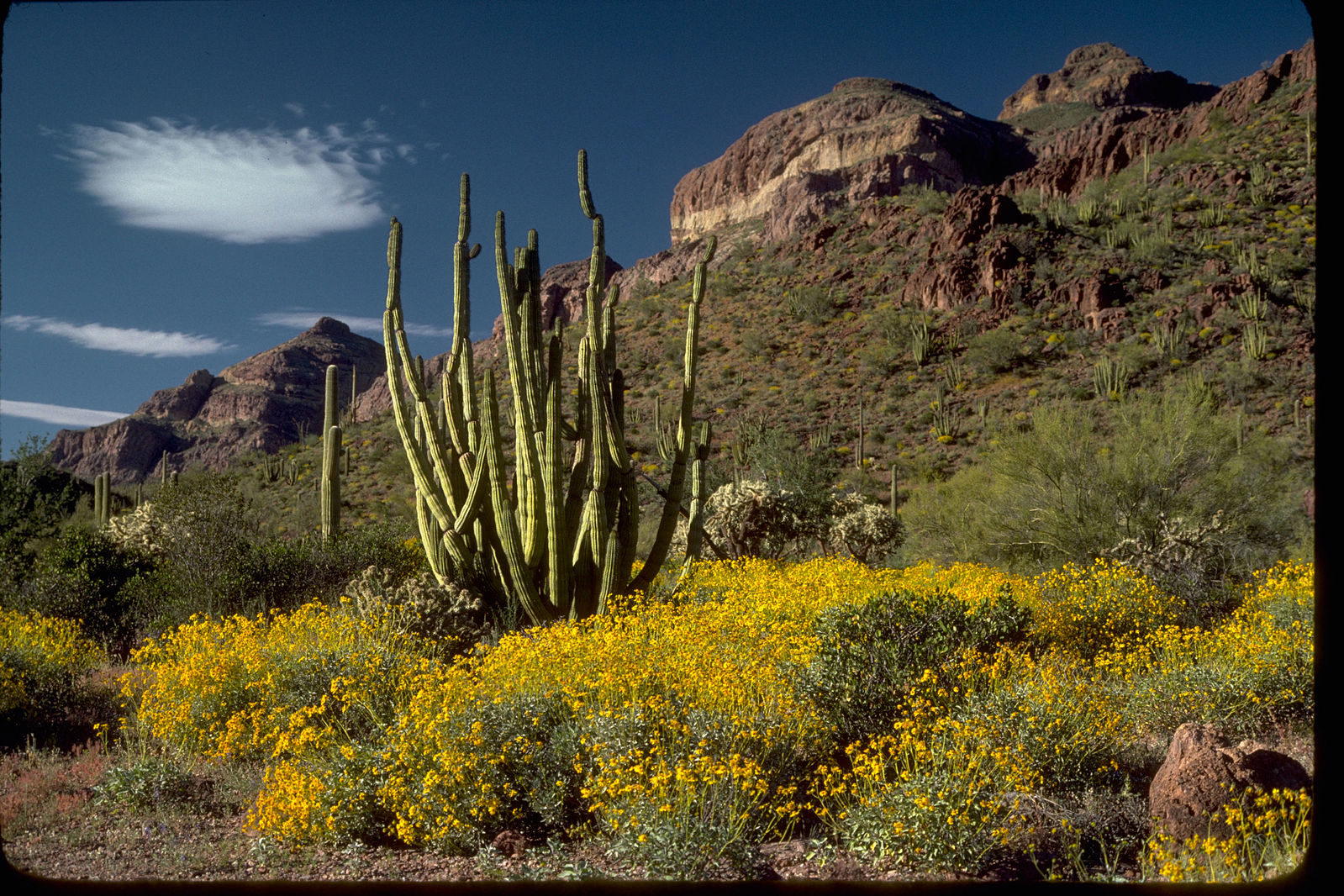
 Organ Pipe Cactus National Monument is a U.S. National Monument and UNESCO biosphere reserve located in extreme southern Arizona that shares a border with the Mexican state of Sonora. The park is the only place in the United States where the organ pipe cactus grows wild. Along with organ pipe, many other types of cacti and other desert flora native to the Yuma Desert section of the Sonoran Desert region grow in the park. Organ Pipe Cactus National Monument is 517 square miles (1,338 square kilometers) in size. In 1976 the monument was declared a Biosphere Reserve by UNESCO, and in 1977 95% of Organ Pipe Cactus was declared a wilderness area.
 Land for the Monument was donated by the Arizona state legislature to the federal government during Prohibition knowing that the north-south road would be improved and make contraband alcohol easier to import from Mexico. In 1937 the land was officially opened as a national monument.
At the north entrance of the park is the unincorporated community of Why, Arizona; the town of Lukeville, Arizona, sits at the park's southern border. Lukeville is a border crossing point to Sonoyta, Sonora, Mexico.
 Organ Pipe Cactus National Monument is bordered to the northwest by Cabeza Prieta National Wildlife Refuge and to the east by the Tohono O'odham Indian Reservation.
On August 9, 2002, Ranger Kris Eggle was shot and killed by a suspected Mexican drug smuggler during a United States Border Patrol operation. The visitor center has been named in his honor. The majority of the park was closed from 2003 to 2014.